Practical certificate · Useful resources
Visual glossary of horticultural tools
A checklist of the tools used in the practical certificate: an illustration of each and what it is used for.
⚒
| Illustration | No. | Tool | Use |
|---|---|---|---|
|
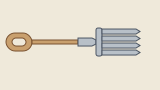
1 | Border fork | Smaller, lighter fork with slimmer tines than a digging fork. Used for forking over soil and lifting plants in beds and borders where space is tight and a full-size fork would damage neighbouring plants. |
|
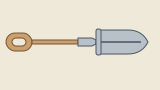
2 | Border spade | Smaller spade with a narrower blade than a digging spade. Used for digging, planting and dividing perennials in established borders where there is little room to work. |
|
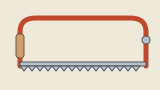
3 | Bow saw | Saw with a tubular frame holding a tensioned, replaceable blade. Cuts branches and small logs that are too thick for loppers; the open frame stops it jamming in the cut. |
|
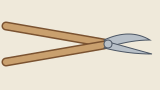
4 | By pass loppers | Long-handled cutters whose blade slides past a hooked jaw like scissors, giving a clean cut on live wood. The long handles give leverage for stems up to about 4 cm thick. |
|
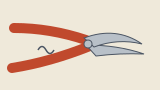
5 | By pass secateurs | One-handed pruners where a sharp blade slides past a hooked lower jaw, giving a clean cut that suits live, green stems up to about 1.5 cm. Anvil secateurs crush stems and are better kept for dead wood. |
|
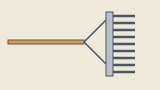
6 | Comb rake | Sturdy rake with a narrow, flat head and short, rigid teeth. Used to break down clods, remove stones and surface debris, and prepare a fine, level tilth on smaller areas such as seedbeds. |
|
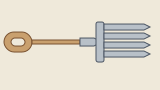
7 | Digging fork | Strong fork with four thick, square or flat tines. Used to dig heavy or stony soil, break up compacted ground, lift root crops and turn compost heaps. |
|
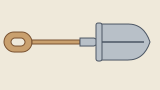
8 | Digging spade | Spade with a flat, rectangular blade and a tread on the shoulders. Used to dig over ground, cut bed edges, dig planting holes and move soil. |
|
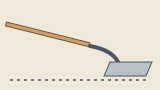
9 | Draw hoe | Hoe with a flat blade set at roughly right angles to the handle on a swan neck. Used with a chopping action and drawn towards you to cut through weeds, earth up crops and draw out seed drills. |
|
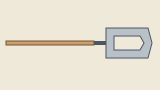
10 | Dutch hoe | Hoe with a flat blade held just beneath the soil surface and pushed (or pulled) to slice off weed seedlings at the roots. Works best on a dry day so cut weeds shrivel; it will not remove deep perennial roots. |
|
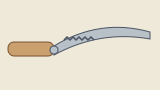
11 | Folding pruning saw | Compact saw whose blade folds into the handle for safe carrying. A curved blade cuts on the pull stroke with less effort, and replaceable blades are a sign of a good one. Used for branches too thick for secateurs, especially in tight spaces. |
|
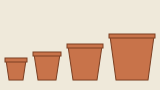
12 | Pots: 1L, 2L, 5L, 10L | Plastic or clay containers in graded sizes. Plants are potted on from small to larger pots as their roots fill the container. Drainage holes are essential. |
|
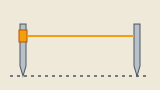
13 | Garden line | String stretched taut between two pegs, or a reel and a peg, to mark a straight line. Used for sowing and planting in straight rows and for setting out edges and beds. |
|
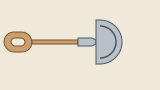
14 | Half moon edger | Spade-like tool with a sharp, crescent-shaped blade. Used to cut neat, clean edges to lawns and beds and to trim back overgrown turf edges. |
|
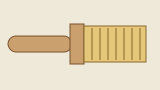
15 | Hand brush | Small brush used to sweep soil, compost and debris from benches, paths and hard surfaces so the work area stays tidy and safe. |
|
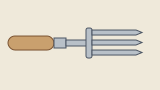
16 | Hand fork | Short-handled fork for small-scale work. Used to loosen soil around plants, lift weeds with their roots and tease out small plants in beds, pots and containers. |
|
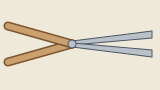
17 | Hedge shears | Long, straight-bladed shears worked with both hands. Used to trim formal hedges and topiary; best on soft, light growth, as thick stems need loppers or secateurs. |
|
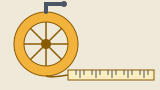
18 | Landscape tape | Long measuring tape on a reel, usually 30 m or more. Used to measure and set out plots, beds and distances accurately, and to mark right angles with the 3-4-5 method. |
|
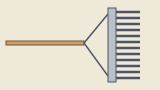
19 | Landscape rake | Wide-headed, lightweight rake with many short tines. Used to level and spread topsoil, compost or gravel across large areas and to rake out a fine finish for seed or turf. |
|
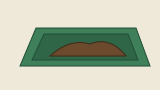
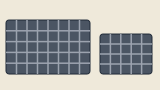
20 | Potting tray | Shallow, rimmed tray to work in when potting, sowing or pricking out. It catches spilled compost, keeps the bench tidy and holds pots steady while they are filled. |
|
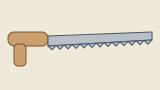
21 | Pruning saw | Fixed, usually curved blade with large, sharp teeth and a pistol-style grip. Used for branches too thick for loppers and for shaping trees and large shrubs, leaving a clean cut. |
|
22 | ½ and full seed tray | Shallow trays, full size or half size, filled with seed compost for sowing and later pricking out seedlings. Half trays suit smaller quantities of seed. |
|
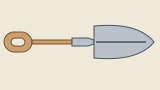
23 | Shovel | Wide, dished blade with a rounded or pointed tip. Used for moving loose materials such as soil, compost, sand and gravel, rather than for digging hard ground. |
|
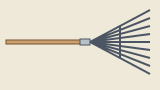
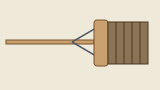
24 | Spring tine rake | Fan-shaped rake with flexible, springy metal tines. Used to gather leaves, grass clippings and light debris from lawns and beds without damaging the surface. |
|
25 | Stiff broom | Broom with stiff bristles. Used to sweep soil, leaves and debris from paths, patios and other hard surfaces. |
|
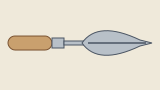
26 | Trowel | Small hand tool with a pointed, scoop-shaped blade. Used to dig planting holes for small plants, bedding and bulbs, to transplant seedlings and to pot on. |
|
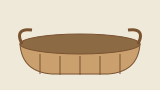
27 | Trug | Shallow, curved-sided basket with two handles, traditionally wood and now often plastic. Used to carry small tools, weeds, cuttings and harvested produce around the garden. |
|
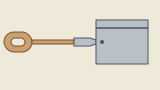
28 | Turfing iron | Flat, straight-edged blade for cutting and lifting turf cleanly. Also used to cut straight edges when laying or repairing lawns. |
|
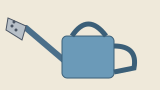
29 | Watering can and rose | Can with a long spout and a removable perforated head (the rose) that breaks the flow into a gentle spray. Used for watering seedlings and young plants without washing out the compost; remove the rose to water established plants at the base. |
|
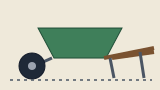
30 | Wheelbarrow | One-wheeled barrow with a tipping tray and two handles. Used to move heavy or bulky loads such as soil, compost, plants and debris; load the weight over the wheel for balance. |